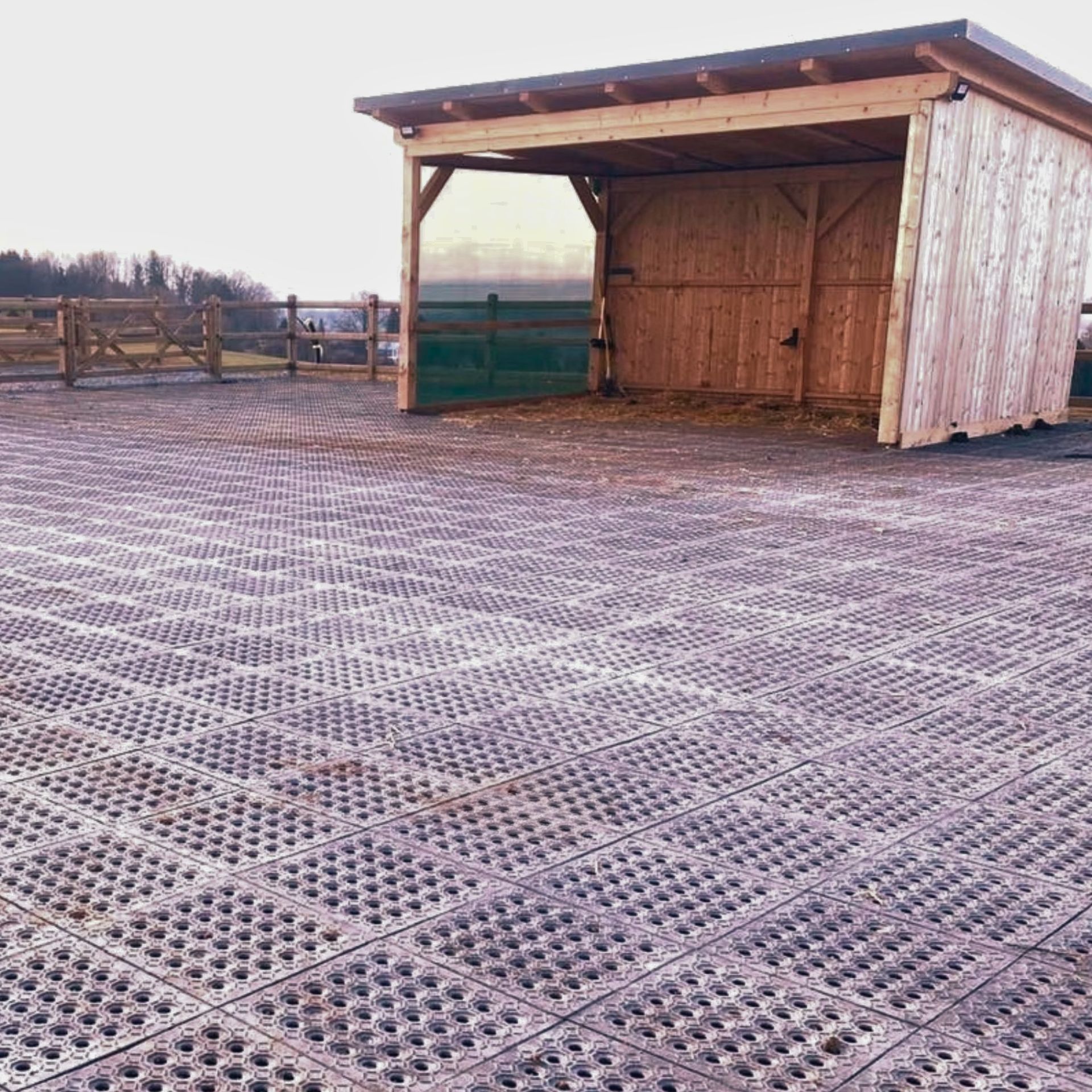
Paddock panel 54301
For arenas, lunging circles and heavily used spots. Heavy, sits firmly and needs no infill.
- Size50 × 50 × 5.3 cm
- Weight9.2 kg
- Load capacityapprox. 25 t
- Infillnot needed
Work out how many panels you need and see your area in 3D.
Without a panel the hoof sinks in, with a panel the load is spread evenly.
Preview with sample prices from agrarzone.at as of 10.11.2026. In the shop you always see the current price here.
1Ground
Most paddock grids do not need a classic sub-base. What matters is your ground. As a rule of thumb: where you do not sink in wearing wellies, you can lay them directly.
Mow the grass short, level molehills and holes, lay the grids. If you fill them with soil, the grass grows through and holds the grids in place.
Sand drains naturally and is load-bearing. Level the area, compact it lightly, lay panels or grids and fill them with sand.
An existing gravel area is already a good sub-base. Remove large stones, level with grit or sand, then lay.
On wet clay soil, panels sink over time. Better: dig out the mud, lay a membrane, add hardcore and compact it, level with grit.
Without a membrane the hardcore is pressed into the clay and the clay rises up. The membrane keeps the layers apart and lets water through.
On soft ground 10 to 20 cm is usually enough, well compacted. On very wet ground, drainage also helps.
A 1 to 2 % slope lets rainwater run off to the side. So even after heavy rain no water stands on the paddock.
2Grids & mats
For arenas, lunging circles and heavily used spots. Heavy, sits firmly and needs no infill.

For paddocks, turnout and muddy corners. Open grid for filling, made from recycled material from Austria.

For paddocks and paths when you carry a lot yourself: only 1.5 kg each, quick to lay.
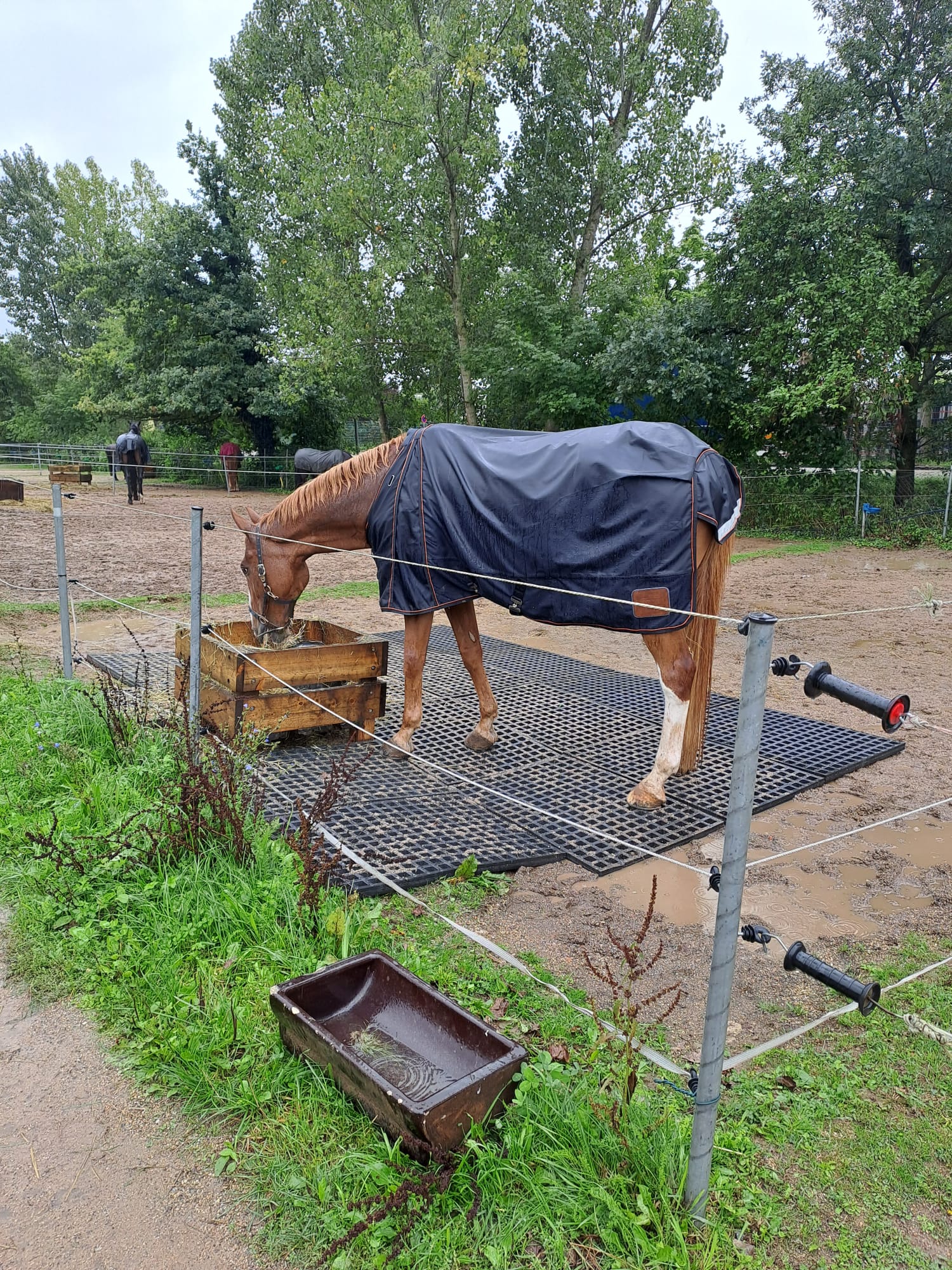
For paddocks, field gateways and paths. Large mat, quick to lay and easy to cut to size.
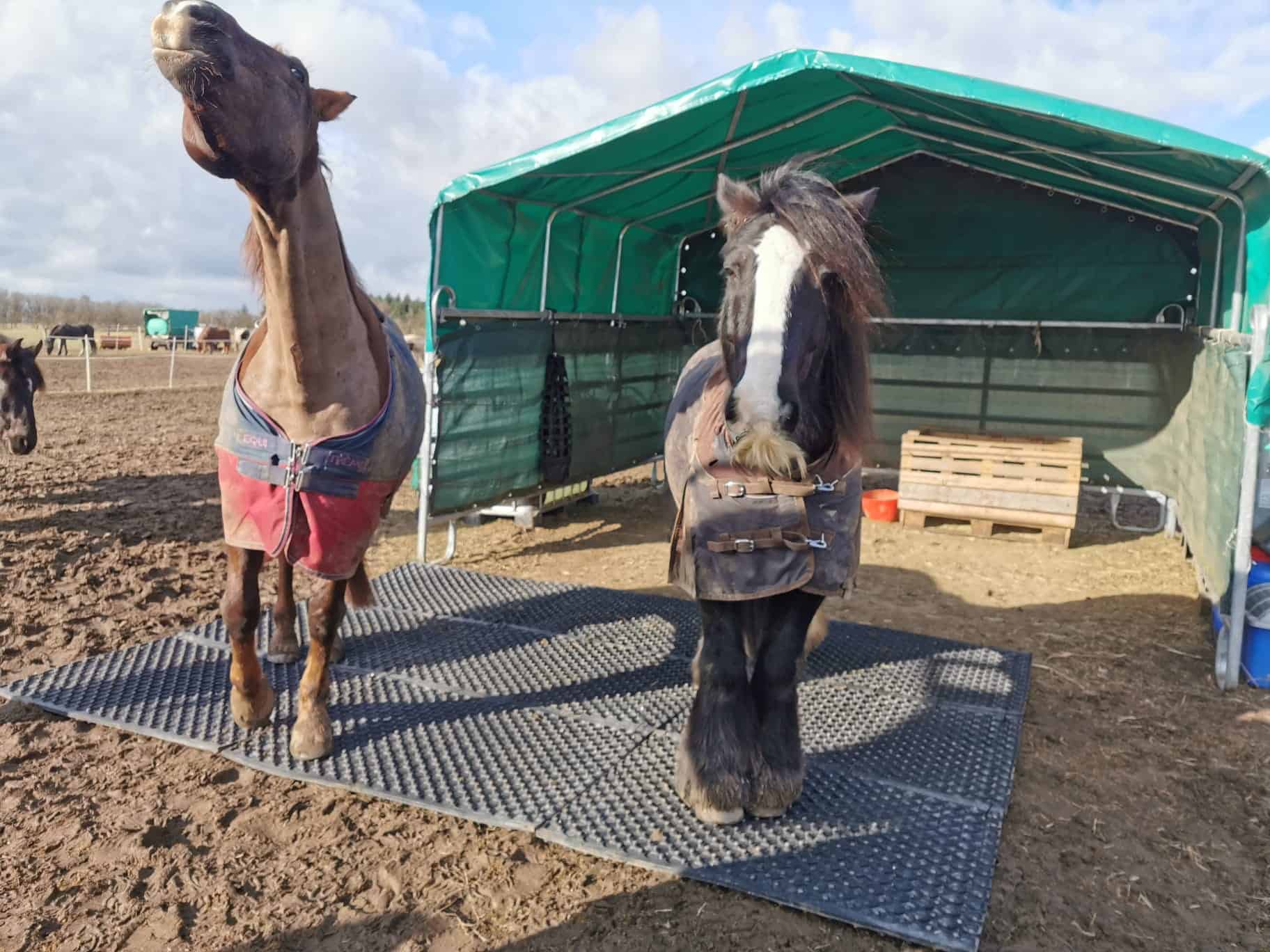
For arenas and paddocks with lots of rain. Drainage channels carry water away quickly.
For field gateways, tracks and driveways. Joined with cable ties and can be moved at any time.
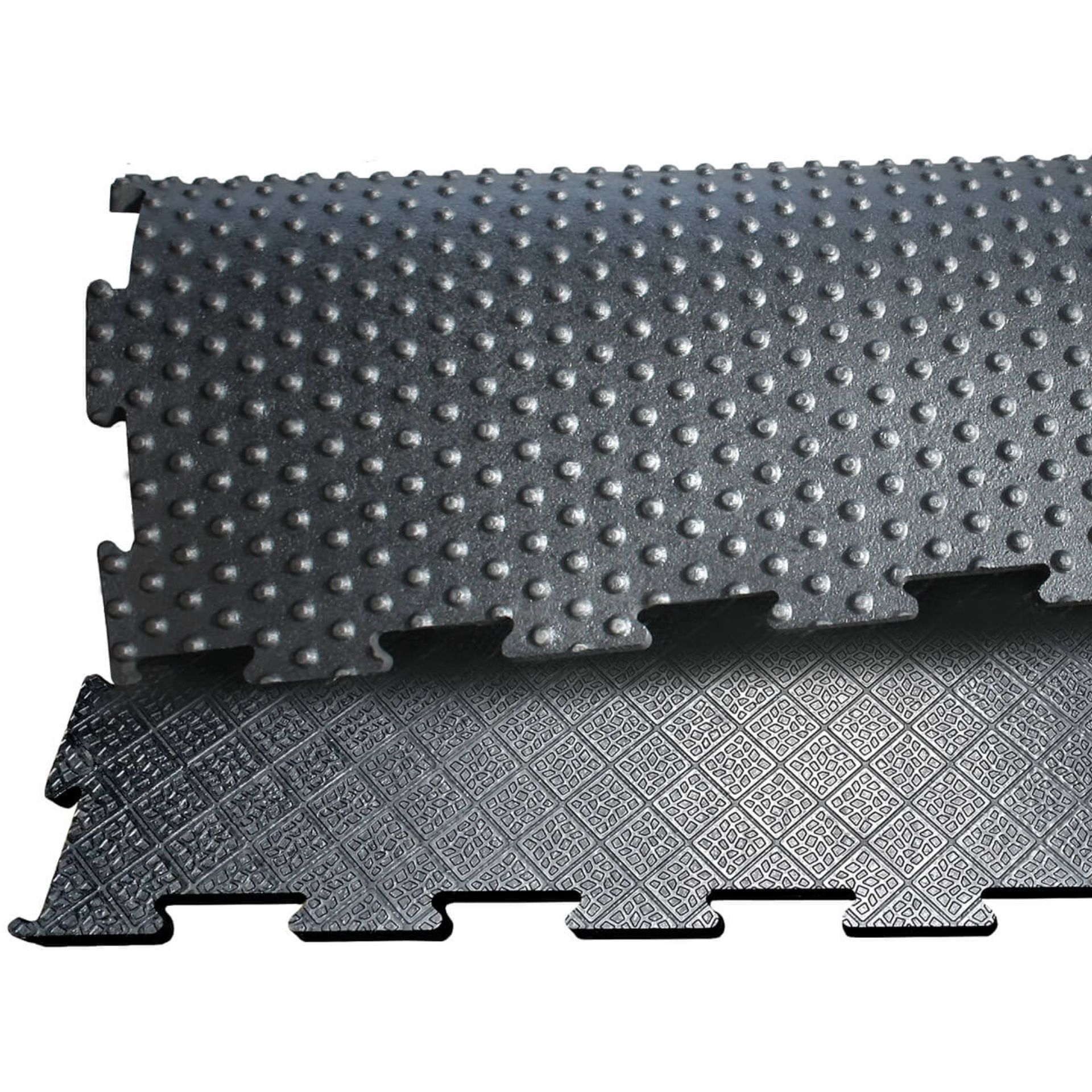
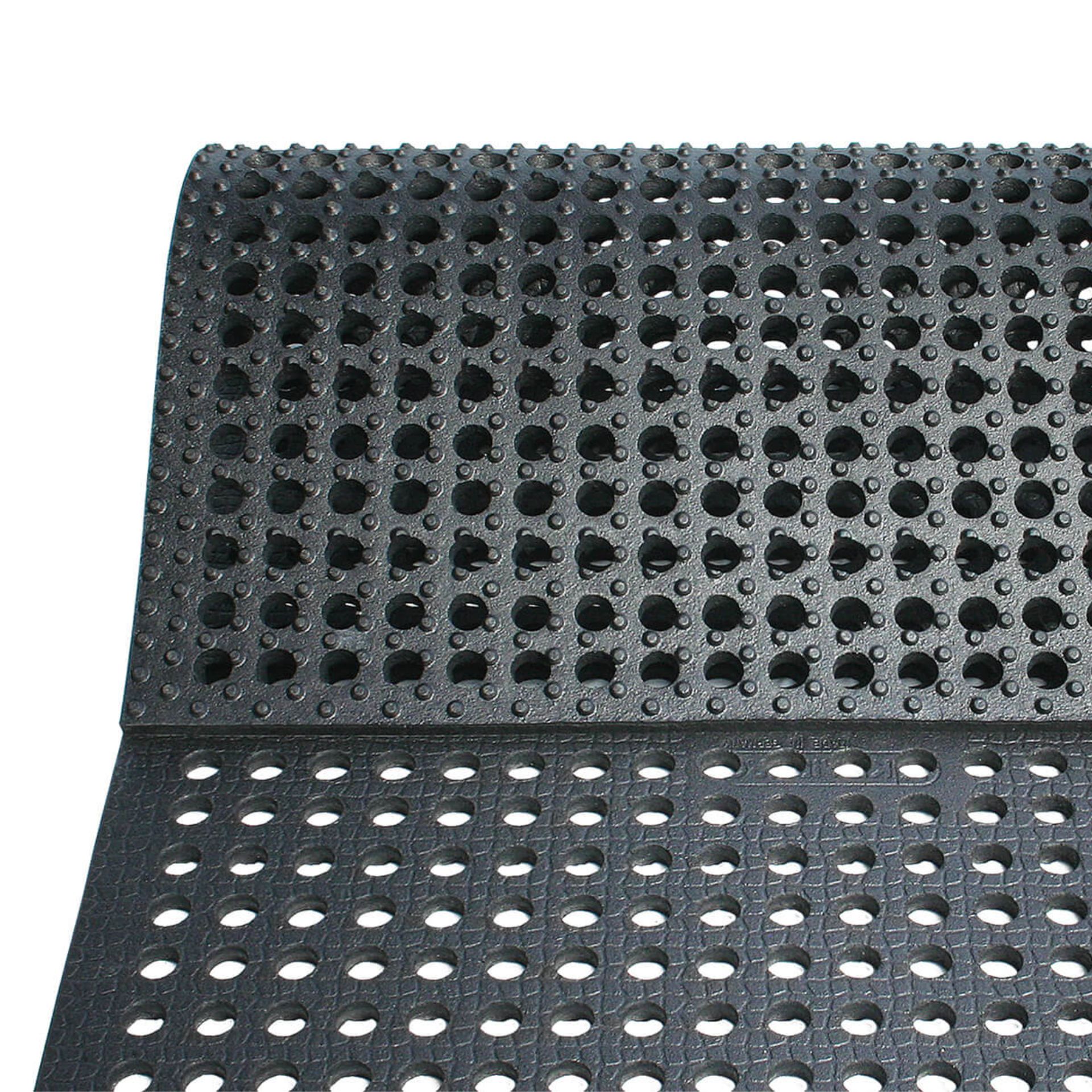
For paddocks and wash bays. Soft rubber with diamond profile, gentle on tendons and joints.
Prices incl. VAT. Plus infill material, hardcore and membrane if needed, and delivery by freight carrier.
3Laying
Mark the corners and plan a slight slope.
Mow or level, on mud put in the sub-base.
Lay the first row along the stable wall or fence.
Clip together row by row, cut to size at the edge with a saw.
Fill the grids to the top edge, sweep in and dampen.
Timber edging or kerbstones keep infill and panels in place.
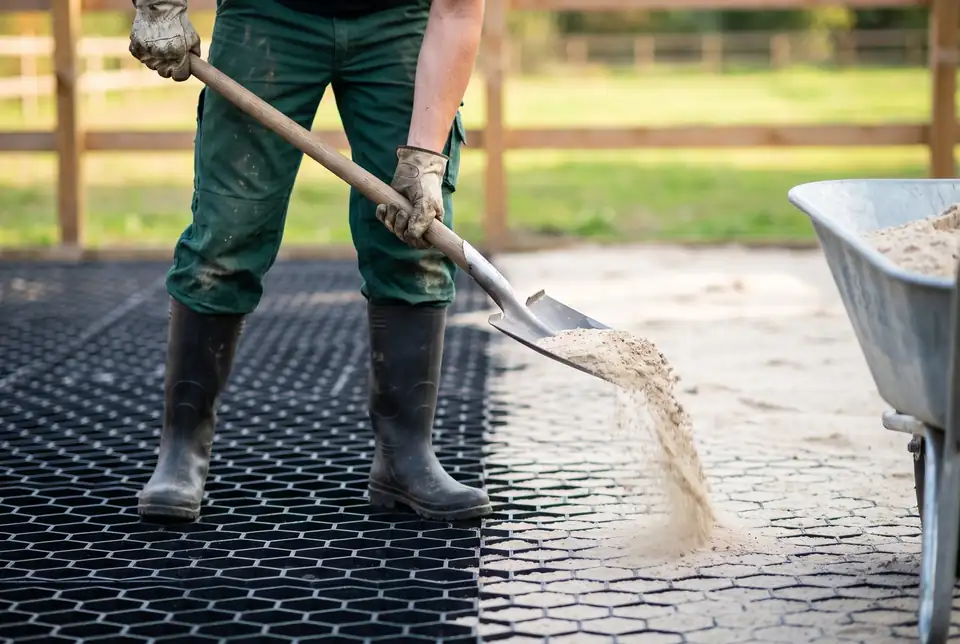
Only once filled do grids give secure, non-slip footing, and the cell walls are protected from hooves and vehicles. So never leave an area open for long.
What to fill with?4Infill
Soft and gentle on joints, the classic for paddocks and arenas. Use washed sand.
Lets water drain away especially quickly. Pea gravel rather than grit, because sharp edges are bad for hooves.
Soft and warm, but they rot. Expect to top them up every year.
For areas that should stay green, such as field gateways with little traffic.
This depends on the planning rules where you live and your local council. Loose-laid panels without foundations usually do not count as a structure. The more permanent and larger the area, the more likely you are to need permission.
Before you build, check briefly with your local council's planning department. A phone call is usually enough.
cheap, soft, quickly spread
rot within 1 to 2 years and turn muddy again without drainage
load-bearing and inexpensive
stones shift and get trodden in, hard surface for hooves
very durable, easy to muck out
expensive, seals the ground, slippery when wet
soft, non-slip, ready straight away
heavy, water must be able to drain well
You will find rubber mats among our Paddock mats.
With the usual 50 × 50 cm panels it is 4 per square metre. Add 3 to 5 % for edges and cutting, the calculator does this automatically.
That depends on the panel and the quantity. Light grids are cheaper than heavy closed panels, and with tiered prices the price per m² drops noticeably for larger areas. You can see the current prices on the panels above and directly in the calculator.
Good plastic panels last many years because they are resistant to frost, wet, urine and UV light. The paddock grid ECO comes with a 20-year guarantee. To make it last that long, the grids should always be filled.
Yes, on load-bearing ground such as grass, sand or gravel you lay paddock panels and grids directly. The area should be level and free of large stones. Only on permanently wet clay soil is a simple sub-base worthwhile.
In the short term yes, the area can be walked on straight away. On soft clay, however, the panels sink over time and mud pushes up. So dig out the mud, lay a membrane and put in about 15 cm of hardcore. On that, the panels stay stable for good.
A water-permeable geotextile separating membrane. It separates hardcore and clay so the layers do not mix. Choose a robust membrane that can also withstand sharp hardcore, and let the strips overlap by about 30 cm.
First the grids are filled to the top edge, at 5 cm depth that is about 0.04 m³ per m². On top, 2 to 3 cm of sand is enough as a walking layer. A thicker loose layer quickly turns back to mud in the rain.
Yes, all panels and grids in our calculator can be driven on, for example with a yard loader or tractor. It is important that grids are filled to the top edge, otherwise the cell walls can break under the load.
Once filled they give very secure footing, because hoof and boot stand on sand or gravel rather than bare plastic. Unfilled grids can be slippery when wet. So always fill them to the top edge.
Yes, if the grids are filled to the top edge. Then the studs stand in the sand and not on the cell walls, and the panels are protected. On open, unfilled grids studs can catch and damage the cell walls. Robust panels such as the paddock panel 54301 or the ECO grid cope best with the load.

And in the stable?
Outside, paddock grids give you firm ground, inside, stable mats protect joints and hooves and save bedding.
To the stable mat buying guideOur customer service is happy to help you plan.